Skip to content

Is solar worth it for a Central Wisconsin farm?

Updated October 2026. For many Central Wisconsin farms, yes. Solar can lower a farm's power bills, and paired with batteries it can keep critical loads like milk cooling, barn fans, and well pumps running in an outage. In 2026, farms on a non-residential meter may qualify for a Focus on Energy business rebate of up to $25,000 and a federal business tax credit with a 2027 deadline. USDA REAP grants now go only to projects that are already built and running.

Northwind Solar, a worker-owned cooperative in Amherst, has built about 195 ground-mount solar systems and 143 projects with battery storage since 2008. Request a free farm solar estimate.

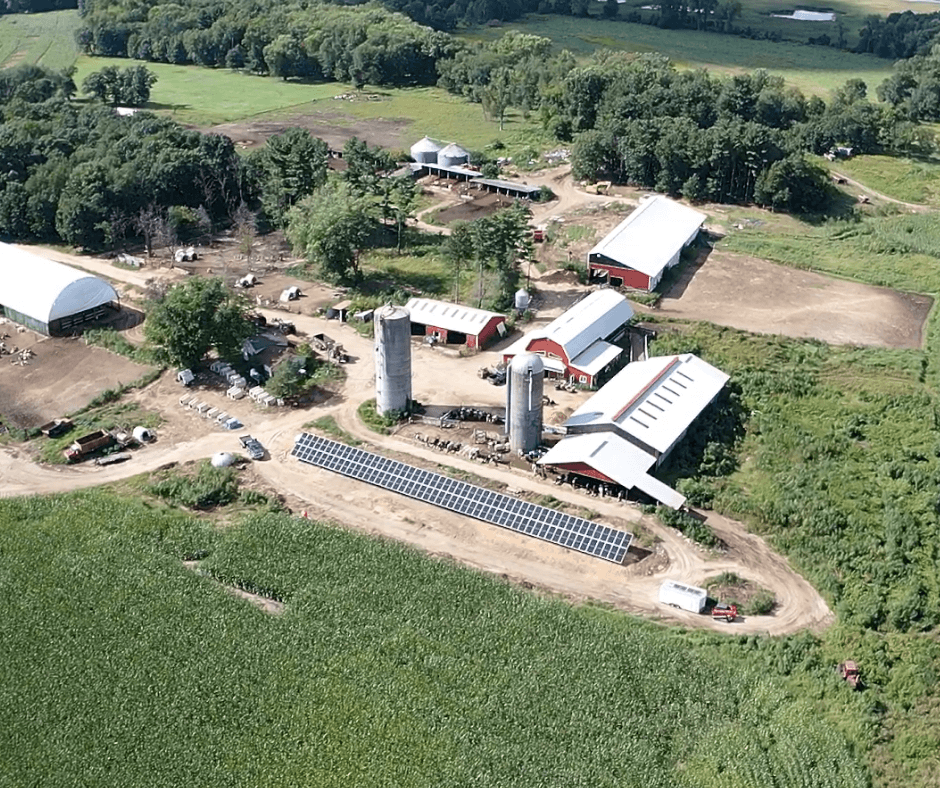
Ground-mounted solar array on a Central Wisconsin farm

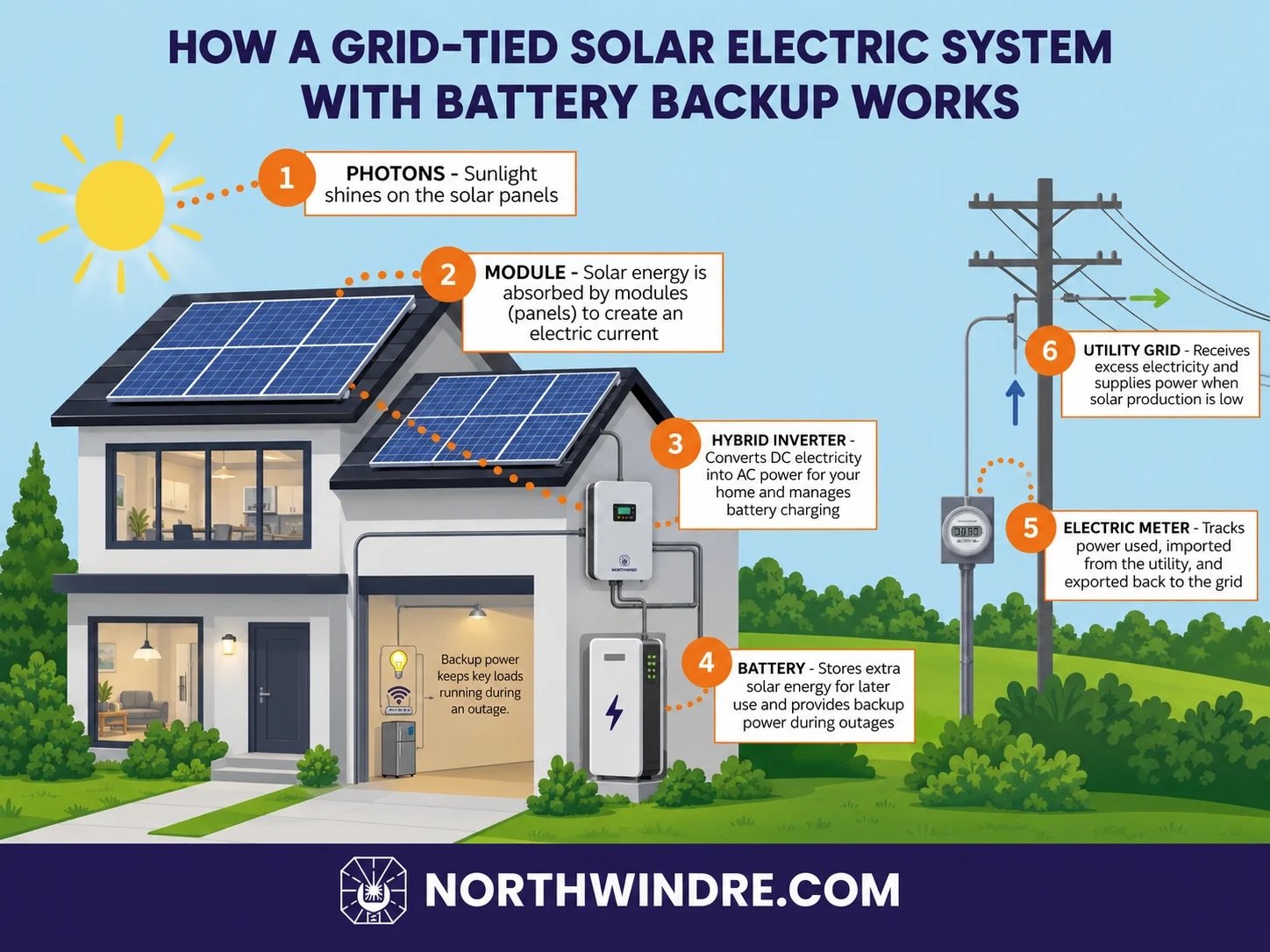
How battery backup works in Central Wisconsin: diagram

Which solar incentives can a Wisconsin farm use in 2026?

Focus on Energy business rebate. For systems installed in 2026 on a non-residential meter, Focus on Energy pays $600 per kW up to $2,400, then $50 per kW after that, up to $25,000 total. Your utility must take part in Focus on Energy, and you reserve the rebate before you install. A farmhouse on a residential meter uses the home rebate instead: $600 per kW, up to $2,400. Focus's business page names commercial and multifamily properties, so confirm with Focus on Energy that your farm meter qualifies before you budget for it.

Federal business tax credit. The homeowner solar credit ended after 2025, but a farm business can still use the Clean Electricity Investment Credit (Section 48E). Under the 2025 federal tax law, a solar project that starts construction after July 4, 2026 must be placed in service by December 31, 2027 to qualify. New foreign-supplier rules also apply to projects that start construction in 2026 or later. Have your tax preparer confirm what your operation can claim.

USDA REAP. USDA canceled its old REAP funding notice in April 2026 and published a new final rule on October 1, 2026. Under the new rule, your project must be finished 12 to 24 months before you apply (the first window after the rule may allow up to 36 months), and you must send 12 months of real production data. Ground-mounted solar on certified cropland is not eligible. Neither are systems with parts made in a country the federal government names as a foreign adversary. USDA has not yet announced the next application window.

Farm efficiency rebates. Focus on Energy's 2026 agriculture rebates include $70 per horsepower for a variable-speed drive added to an existing irrigation well pump. Cutting load first can shrink the solar system you need. See all solar incentives.

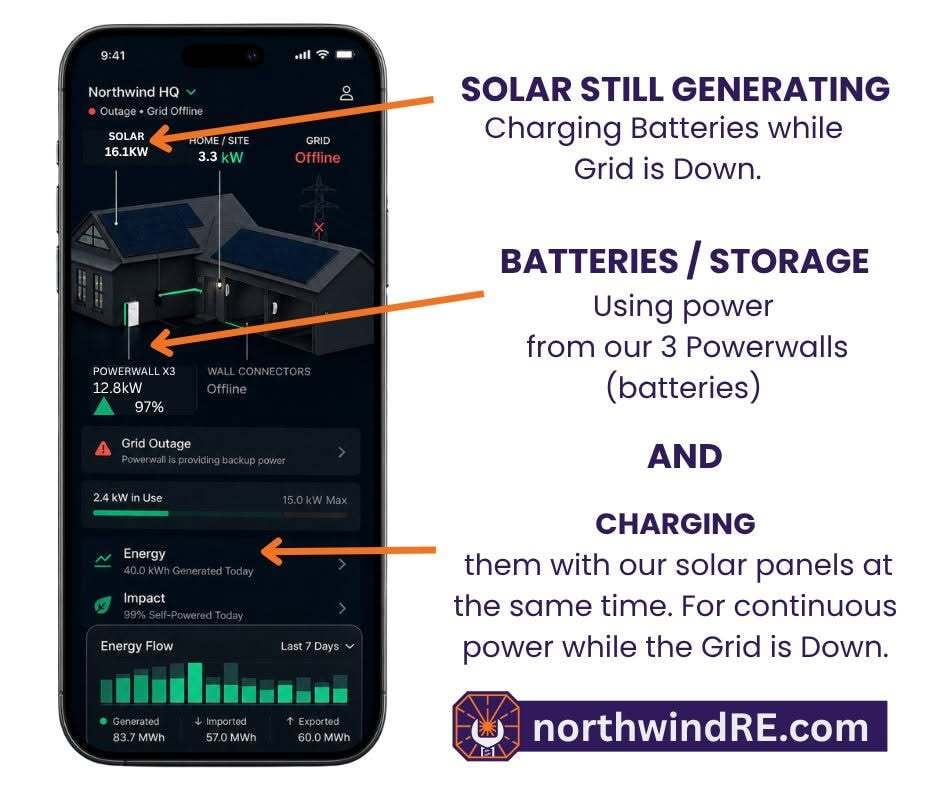
monitoring ap

Should farm solar go on the ground or a barn roof, and who approves the hookup?

Ground mount or roof. A ground mount can face due south at the right tilt, is easier to clear of snow and service, and does not depend on the age of a roof. It uses land and needs a trench back to your service. A barn or shed roof uses space you already have, but the roof must be sound for decades, and older pole barns may need an engineer's review. Northwind has built about 195 ground-mount systems.

Three-phase service. Many dairies, grain sites, and shops have three-phase power. The inverter must match your service type and voltage. If you run a phase converter on single-phase service, say so up front.

Utility approval. Your utility must approve any system before it connects. For public utilities, Wisconsin's PSC 119 rules sort systems into four sizes, from 20 kW or less up to 15 MW. Electric cooperatives set their own policies, so buyback terms differ by co-op. Northwind projects by rural co-op:

Electric cooperativeNorthwind projects
Central Wisconsin Electric Cooperative60
Adams-Columbia Electric Cooperative56
Clark Electric Cooperative18
Taylor Electric Cooperative12
Oakdale Electric Cooperative10

As of October 2026, Central Wisconsin Electric Cooperative is not on Focus on Energy's participating-utility list, so its members should confirm rebate eligibility first.

Sources: USDA REAP final rule (Federal Register, Oct. 1, 2026); IRS Clean Electricity Investment Credit; Focus on Energy business solar; Focus on Energy participating utilities; PSC customer-owned generation.

Battery backup for farm outages

Solar-charged batteries can carry a farm's most critical loads when the grid goes down. Size them to the loads that cannot stop, and plan separately for the big motors.

Dairy

Bulk tank cooling, controls, and parlor lights are good battery loads. A large vacuum pump may be more than a battery bank can start or carry, so many dairies keep a standby generator for it. Pairing batteries with an existing generator can cut how long the generator has to run.

Livestock barns

Ventilation fans, waterers, and alarms keep animals safe in summer heat and winter storms. We look at which fans must run, how many hours of backup you want, and whether to add more battery capacity or a generator for long outages after ice storms.

Grain drying

Grain dryers draw heavy fan and burner loads for a few weeks each fall. Solar can offset that energy across the year under your utility's buyback terms, but batteries are rarely sized to run a dryer through an outage. Plan dryer backup on its own.

Wells and irrigation

A stock-water well pump is often the first backup priority, since animals need water every day. Big irrigation pumps usually run on their own service and are better matched to solar for energy savings than to batteries for backup. We list each pump's horsepower and voltage before sizing anything.

How does a farm solar project with Northwind work?

Step 1 – Share your bills and loads

Send 12 months of electric bills for each meter and a list of key loads like vacuum pumps, fans, dryers, and wells.

Step 2 – Site visit

We check ground-mount and roof options, your service type (single- or three-phase), and where a battery and backup panel would go.

Step 3 – Design and incentive plan

You get a design, a production estimate, and a plan for the Focus on Energy reservation, tax credit timing, and any future REAP application.

Step 4 – Permits and utility approval

We handle permits and the interconnection application with your utility or electric co-op.

Step 5 – Install, inspect, and monitor

Our crews install the system, it passes inspection, your utility approves it, and monitoring starts so you can track production.


Frequently Asked questions

Can I still get a USDA REAP grant for farm solar?

Possibly, but the rules changed. USDA's final rule, published October 1, 2026 and effective October 16, 2026, requires a project to be finished 12 to 24 months before you apply (the first window after the rule may allow up to 36 months), with 12 months of real production data. Ground-mounted solar on certified cropland is not eligible. USDA will announce the next application window in a program notice. Public comments on the rule are accepted through November 2, 2026.

Is there still a federal tax credit for farm solar?

For farm businesses, yes, for now. The Clean Electricity Investment Credit (Section 48E) still applies to business-owned solar. Under the 2025 federal tax law, a solar project that starts construction after July 4, 2026 must be placed in service by December 31, 2027. The homeowner credit for a farmhouse ended after 2025. Ask your tax preparer what your operation can claim.

Can a battery run my dairy during a power outage?

A battery can usually carry critical loads like bulk tank cooling, controls, lights, and a stock-water well. A large vacuum pump or several big motors may need a standby generator. Many farms pair solar-charged batteries with a generator so the generator runs less. A load review during the site visit tells you what a battery can cover.

Can I put solar panels on cropland in Wisconsin?

You can, if local zoning allows it, but USDA's 2026 REAP rule will not fund ground-mounted solar on certified cropland. If you want REAP help, look at barn or shed roofs, farmyard space, or other ground that is not certified cropland. Your Farm Service Agency office can tell you how your land is classified.

Does my farm need three-phase power for solar?

No. Solar works on single-phase or three-phase service. The inverter must match your service, so we confirm your service type and voltage at the site visit. Three-phase farms use commercial three-phase inverters. If you run a phase converter on single-phase service, tell us early, because it affects the backup design.

Does Northwind work with rural electric cooperatives?

Yes. Northwind has completed 60 projects for Central Wisconsin Electric Cooperative members, 56 for Adams-Columbia Electric Cooperative, 18 for Clark Electric Cooperative, 12 for Taylor Electric Cooperative, and 10 for Oakdale Electric Cooperative. Each co-op sets its own interconnection and buyback policy, and we handle the application for you.


What Our Customers Are Saying

Five orange stars

4.9 out of 5 · based on 100+ Google reviews


More solar guides from Northwind Solar

Get a free farm solar and battery estimate