Skip to content

How can Wisconsin municipalities, schools, and nonprofits pay for solar?

Updated October 2026. Wisconsin cities, villages, towns, counties, school districts, and nonprofits can still use federal elective pay (also called direct pay). It turns the federal clean electricity investment credit into a payment from the IRS, even though these groups owe no income tax. Timing now matters: a solar project that starts construction today must be in service by December 31, 2027. A Focus on Energy business rebate of up to $25,000 may help too.

Northwind Solar, a worker-owned cooperative in Amherst, has completed 84 nonprofit and tax-exempt projects since 2008. Learn more about solar for tax-exempt organizations.

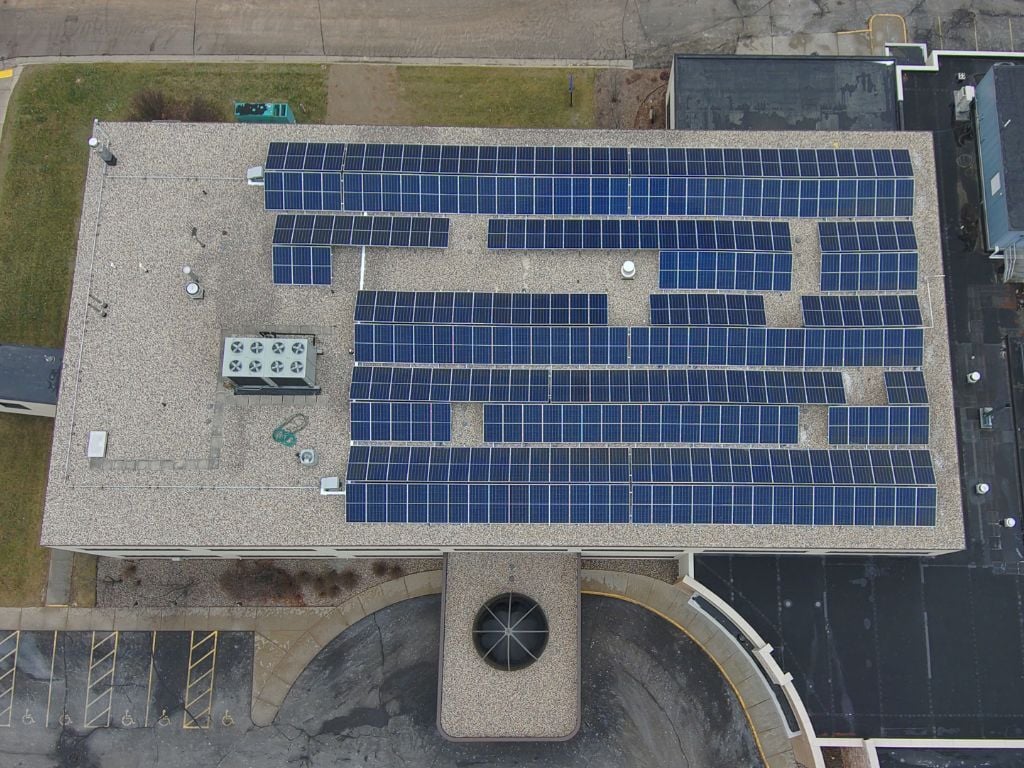
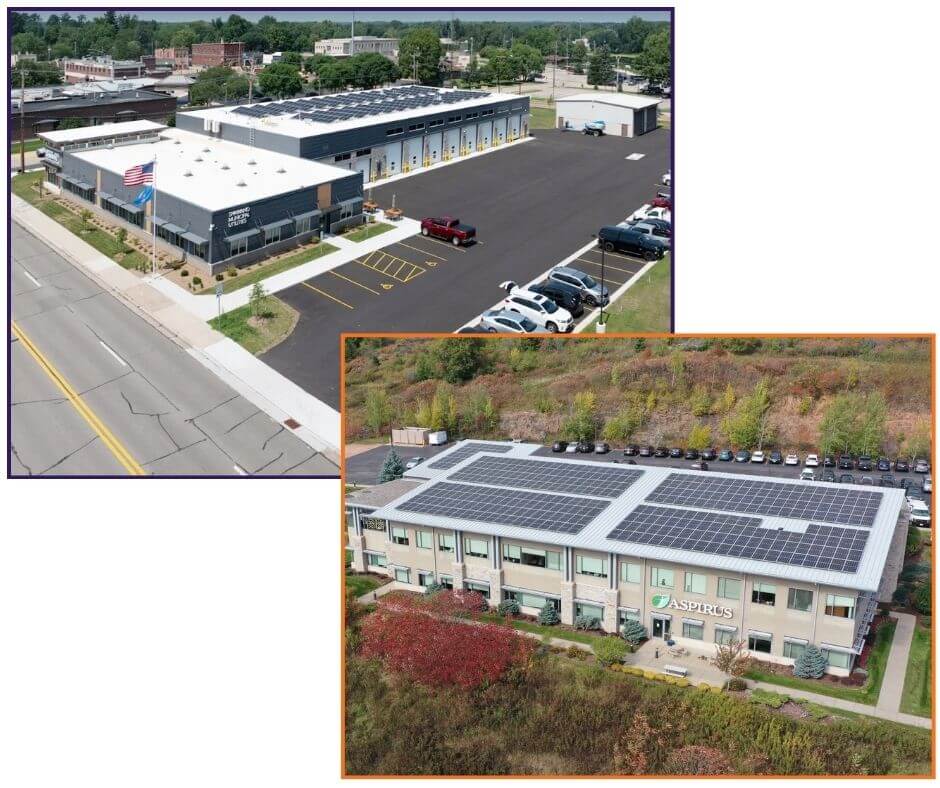
Solar installation for a Central Wisconsin nonprofit or public building

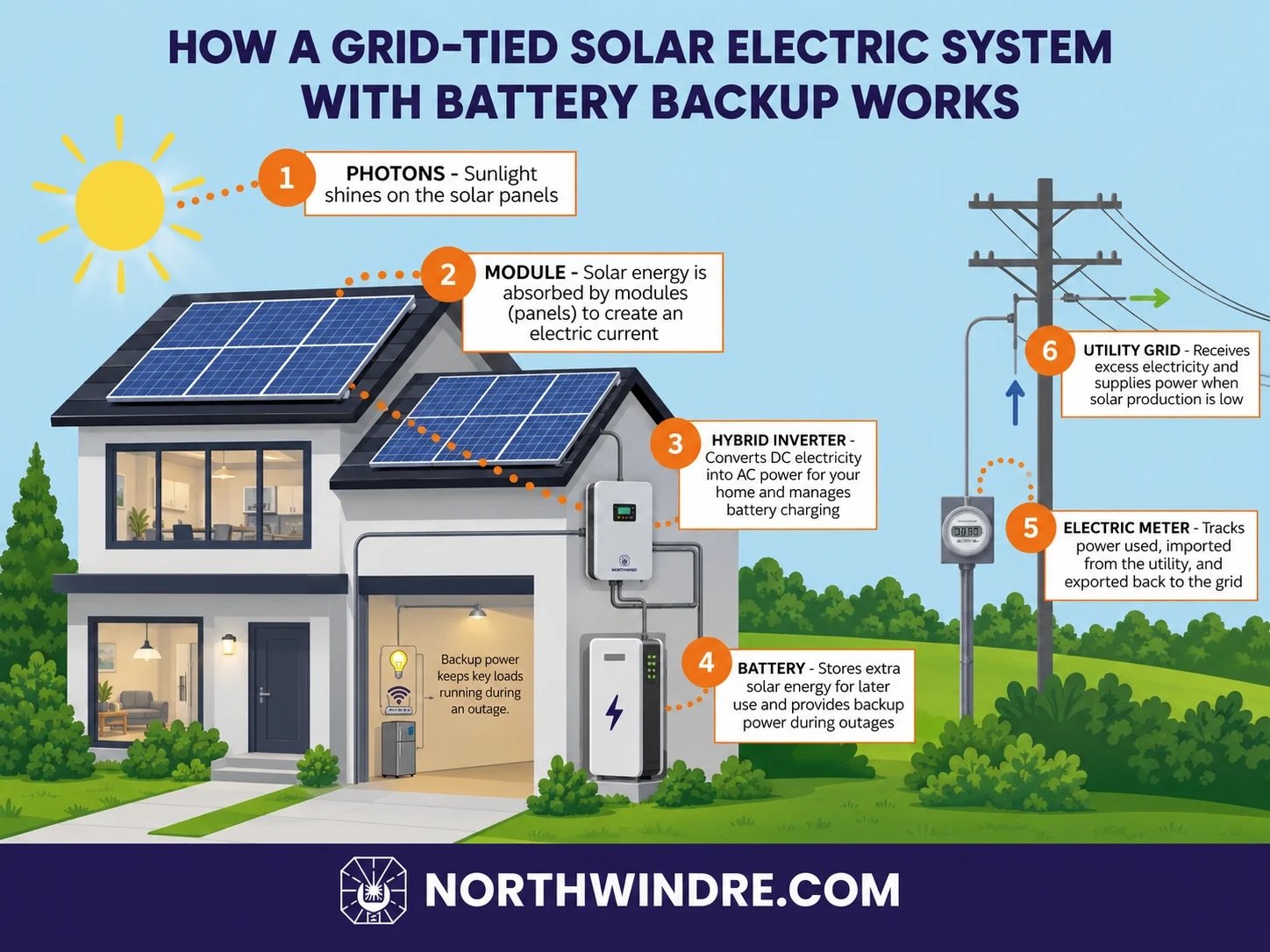
How battery backup works in Central Wisconsin: diagram

How does elective pay work for a tax-exempt solar project in 2026?

Elective pay lets tax-exempt and government groups receive the value of certain federal clean energy credits as a payment. Eligible groups include state and local governments, tax-exempt organizations, rural electric cooperatives, and tribal governments. Your organization owns the system, registers with the IRS before filing, and claims the credit on its annual return.

  • Credit size. The Clean Electricity Investment Credit starts at 6% of the qualified cost. It rises to 30% when prevailing wage and registered apprenticeship rules are met. Projects under 1 MW (AC), which includes most business, farm and school systems, generally get the 30% rate without the wage and apprenticeship rules; confirm with your tax advisor. It can add up to 10 points each for domestic content and for an energy community.
  • Solar deadline. Under the 2025 federal tax law (P.L. 119-21), a solar project that starts construction after July 4, 2026 must be placed in service by December 31, 2027.
  • Batteries. SEIA reports that the 2027 placed-in-service deadline does not apply to energy storage, so a battery project can follow a different timeline.
  • Domestic content. For elective pay, a project of 1 MW or more that starts construction in 2026 or later can lose the entire payment unless it meets domestic content rules or qualifies for an exception. Projects under 1 MW are not affected.
  • Foreign-supplier rules. New restrictions apply to projects that start construction in 2026 or later.

Rules are detailed and still changing. Have your auditor or tax counsel confirm eligibility, wage requirements, and filing steps before your board votes. Northwind can provide the equipment, cost, and timing records they will need.


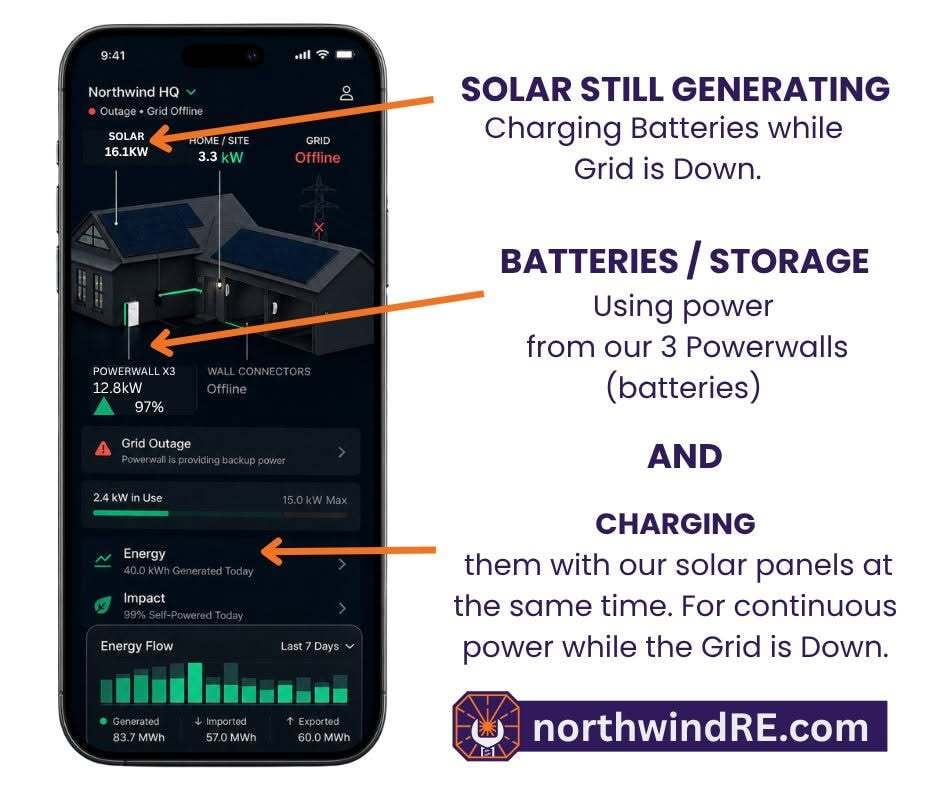
monitoring ap

How should a public body or nonprofit buy solar and connect it?

Procurement. Public entities must follow Wisconsin bidding laws and their own purchasing policies. For example, Wis. Stat. 62.15 requires cities to bid public construction above a set dollar amount. If a local government uses an energy savings performance contract (Wis. Stat. 66.0133), it must request bids or competitive sealed proposals from qualified providers. A clear request for proposals should spell out system size or energy goals, equipment standards, warranties, monitoring, battery backup needs, and who handles the utility application. Nonprofits can use a simpler request but should still compare at least two proposals.

Interconnection. Your utility must approve the system before it runs. For public utilities, Wisconsin's PSC 119 rules sort projects into four size categories, from 20 kW or less up to 15 MW. Cooperatives set their own policies.

Track record. Northwind's tax-exempt and public projects include the UW-Stevens Point Kirby Library and Student Resource Center (case study; a 46.56 kW array completed in 2023, with a second 166 kW phase scheduled for 2026), Waupaca City Hall (about 117 kW of solar with battery storage), and the Antigo wastewater treatment plant (about 352 kW ground mount, 2024).

Sources: IRS elective pay; IRS 48E credit; Focus on Energy business solar; PSC customer-owned generation.
Why public buildings and nonprofits go solar

Lower and steadier energy bills matter when budgets are set a year ahead. Batteries add resilience where an outage hurts most.

Budget predictability

Once a system is paid for, the energy it makes has no fuel cost, which can make utility budgets easier to plan. We give your board a production estimate, monitoring access, and plain numbers so staff can track results against the plan each year.

Water and wastewater

Treatment plants and lift stations run around the clock and use a lot of power. Solar can offset part of that load. A battery can keep controls, alarms, and key pumps running through short outages, with an existing generator covering the largest loads.

City halls and shelters

A city hall, fire station, or warming shelter can use solar and batteries to keep lights, heat controls, communications, and refrigeration on when the grid is down. We size the battery to a critical-load panel, not the whole building, so the cost stays in line with what you truly need.

Schools

Schools use most of their power during the day, when solar produces. A system can also become a teaching tool, with live production data in the classroom. UW-Stevens Point's Kirby Library project shows how a campus can build solar in phases: a 46.56 kW array completed in 2023, with a second 166 kW phase scheduled for 2026.

What are the steps for a municipal, school, or nonprofit solar project?

Step 1 – Gather bills and critical loads

Pull 12 months of electric bills for each meter and list the loads that must run in an outage.

Step 2 – Feasibility and board materials

We provide a site review, preliminary design, production estimate, and incentive summary your board or council can act on.

Step 3 – Procurement and funding

You run your bid or proposal process, register for elective pay with the IRS, and reserve the Focus on Energy rebate.

Step 4 – Permits and interconnection

We handle permits and the interconnection application with your utility or cooperative.

Step 5 – Install, commission, and report

We install and commission the system, set up monitoring, and give you the records your tax advisor needs for the elective pay filing.


Frequently Asked questions

Can a nonprofit or city still get elective pay for solar in 2026?

Yes. The IRS still lists tax-exempt organizations, state and local governments, rural electric cooperatives, and tribal governments as eligible for elective pay. The entity must register with the IRS before filing the return that claims the credit. For solar that starts construction after July 4, 2026, the project must be placed in service by December 31, 2027.

Does Focus on Energy offer solar rebates for schools, municipalities, and nonprofits?

Generally yes, if the site is on a non-residential rate meter served by a participating utility; confirm with Focus on Energy before you budget for it. For 2026 the business solar rebate pays $600 per kW up to $2,400, then $50 per kW after that, up to $25,000. You reserve funds online before installing, and the application is due within 60 days of installation.

Can a battery qualify for elective pay?

Energy storage can qualify for the Clean Electricity Investment Credit, and the IRS lists it for property placed in service after December 31, 2024. SEIA reports that the 2027 placed-in-service deadline for solar does not apply to storage. Foreign-supplier rules still apply, so confirm the battery model and timing with your tax advisor.

Are there Wisconsin state grants for municipal or school solar?

The PSC's Energy Innovation Grant Program has funded renewable energy and storage for municipalities, schools, tribes, hospitals, and nonprofits. Round 6 closed June 30, 2026, and the state awarded $11.5 million to 36 projects on October 20, 2026. The PSC says Round 6 is likely the last unless lawmakers approve more funding.

Are there solar grants for Wisconsin nonprofits and churches?

RENEW Wisconsin's Solar for Good program awards grant funding or solar panels to mission-based nonprofits and houses of worship in Wisconsin. Check RENEW Wisconsin's site for the current application round. Many nonprofits combine a grant with elective pay and a Focus on Energy rebate.

Has Northwind installed solar for public entities?

Yes. Northwind has completed 84 nonprofit and tax-exempt projects. Examples include the UW-Stevens Point Kirby Library and Student Resource Center (a 46.56 kW array completed in 2023, with a second 166 kW phase scheduled for 2026), Waupaca City Hall (about 117 kW with battery storage), and the Antigo wastewater treatment plant (about 352 kW ground mount, completed in 2024).


What Our Customers Are Saying

Five orange stars

4.9 out of 5 · based on 100+ Google reviews


More solar guides from Northwind Solar

Request a free solar feasibility estimate for your facility